Real shipments, explained: what we carried, what went wrong and how it was solved. No vague claims about delivering on time — in logistics the interesting part is what happens when things do not go to plan.
CASE 01 · FOOD INDUSTRY
Food chemicals: 10+ items from different factories and customs cleared in 3 hours
Cargo
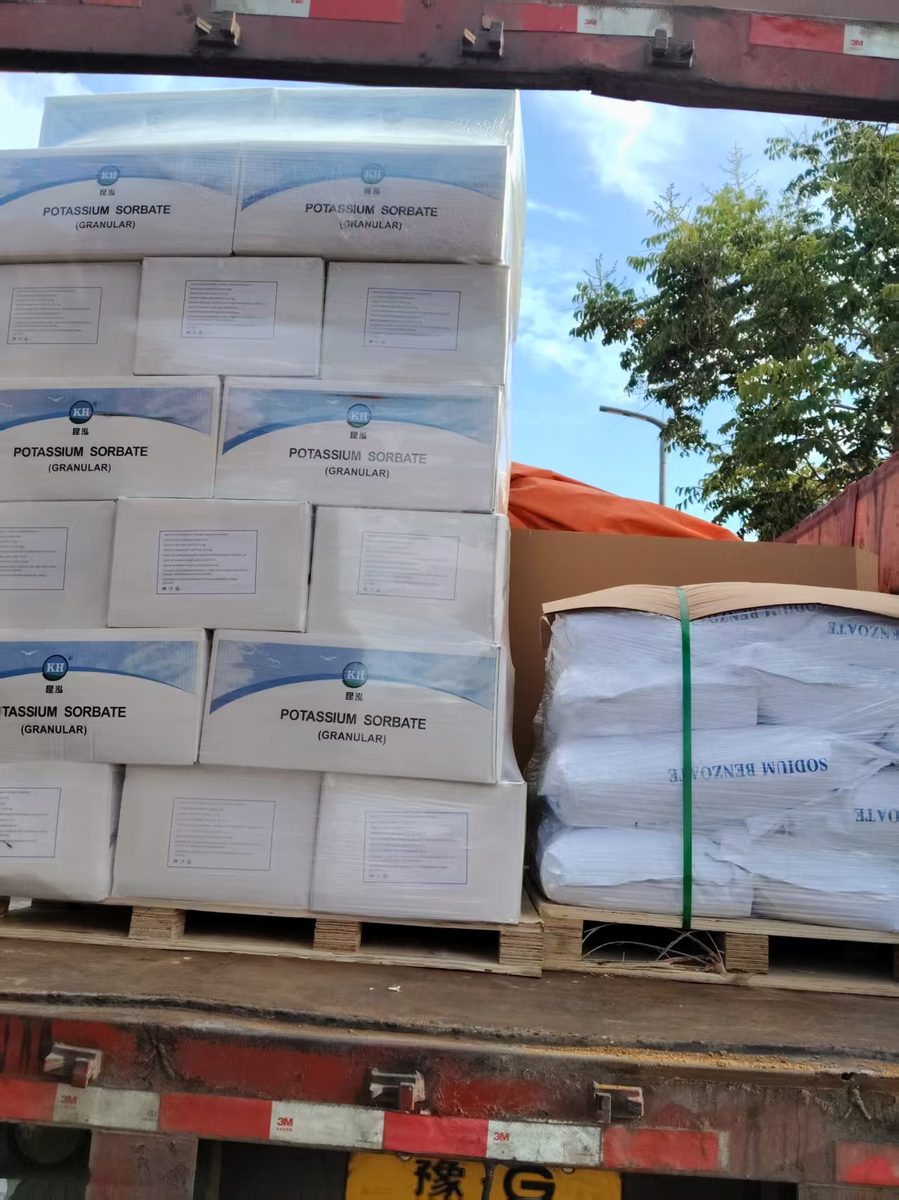
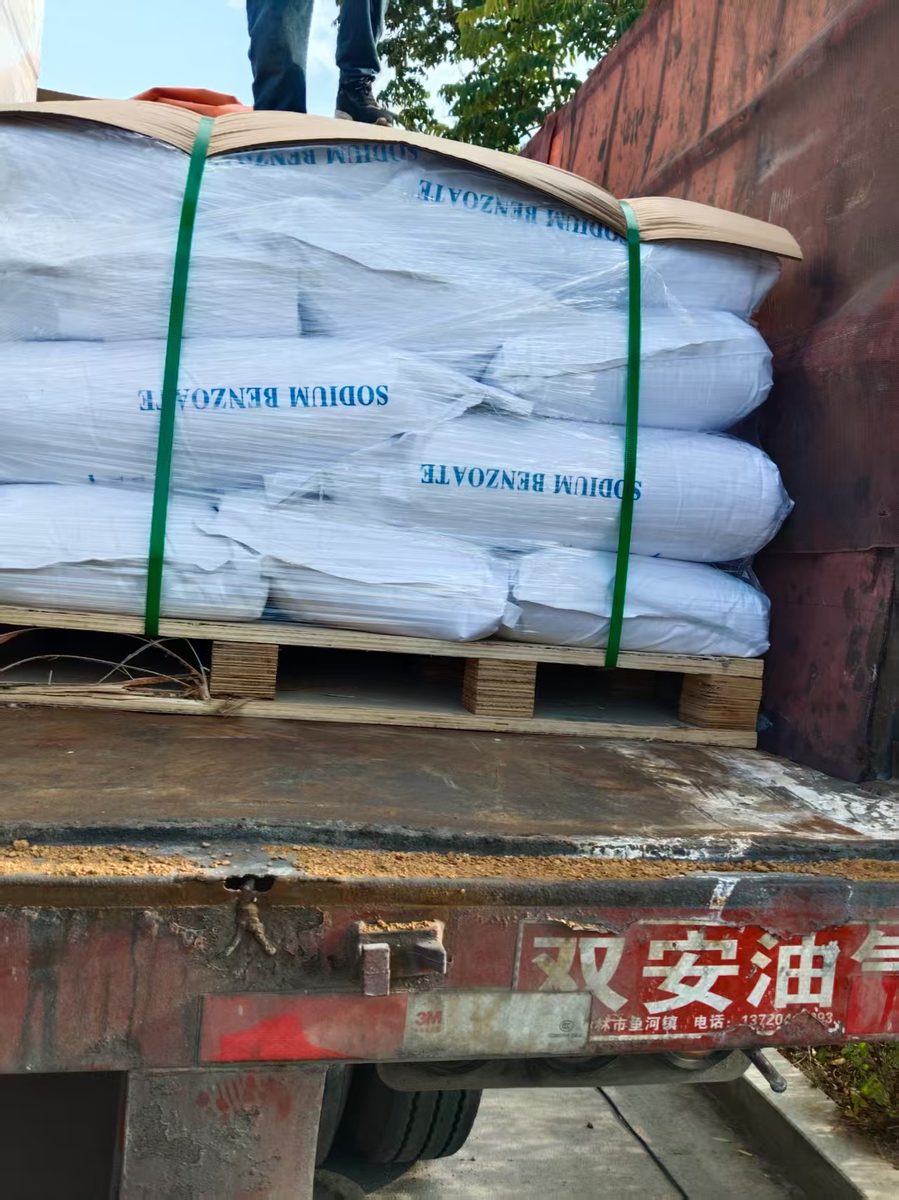
Preservatives and food additives: sodium benzoate, potassium sorbate and more than ten other items
Origin
Several factories across different provinces of China
Consignee
One of the leading food producers in Bishkek
Scheme
Official import with a full document set, cleared in the client's name
Clearance
3 hours from arrival at customs
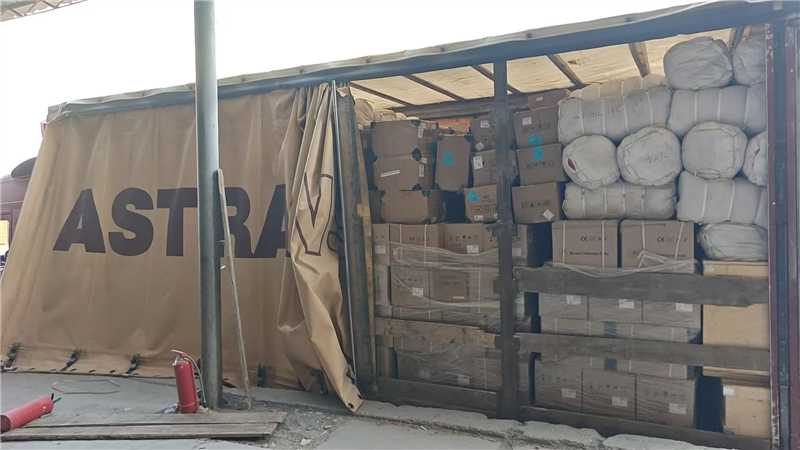
Loading the batch at our warehouse in China
The task
The client needed more than ten different food additives from different manufacturers in a single shipment. The difficulty with this cargo is not weight or dimensions — it is documents and timing. Food additives feed a production line, and the line does not stop: a day of downtime costs more than the entire logistics of the batch.
What went wrong and how we fixed it
During receiving we found that two of the ten factories had shipped batches with markings that did not match the original documents. A small discrepancy in names and batch numbers — and exactly the kind of small thing that holds cargo at the border indefinitely, because the declaration no longer matches what is physically in the truck.
We caught it at our own warehouse, before departure, while checking the arrival against the client's order list. We requested corrected documents from both manufacturers and brought the set in line with the actual cargo.
This is what receiving with a checklist is for. Had the batch left as it was, the mismatch would have surfaced at the border — with standing time, document fixes at a distance and a broken production schedule. Instead it was resolved while the rest of the batch was still being assembled, and it did not affect the delivery date at all.
What we did
Collected cargo from several factories. Each shipped on its own schedule. We received everything, checked names and quantities, inspected packaging and batch markings.
Prepared documents in parallel. Permits for each item were collected alongside the shipments, so by the time the truck reached the border the set was complete and matched the cargo.
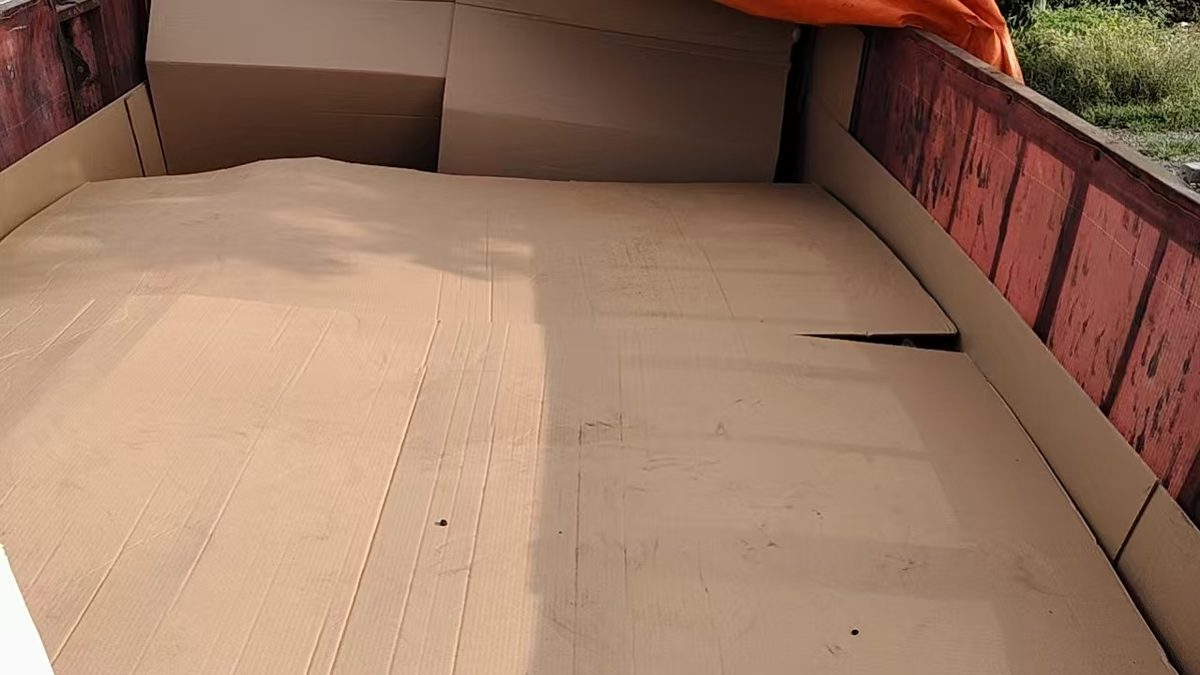
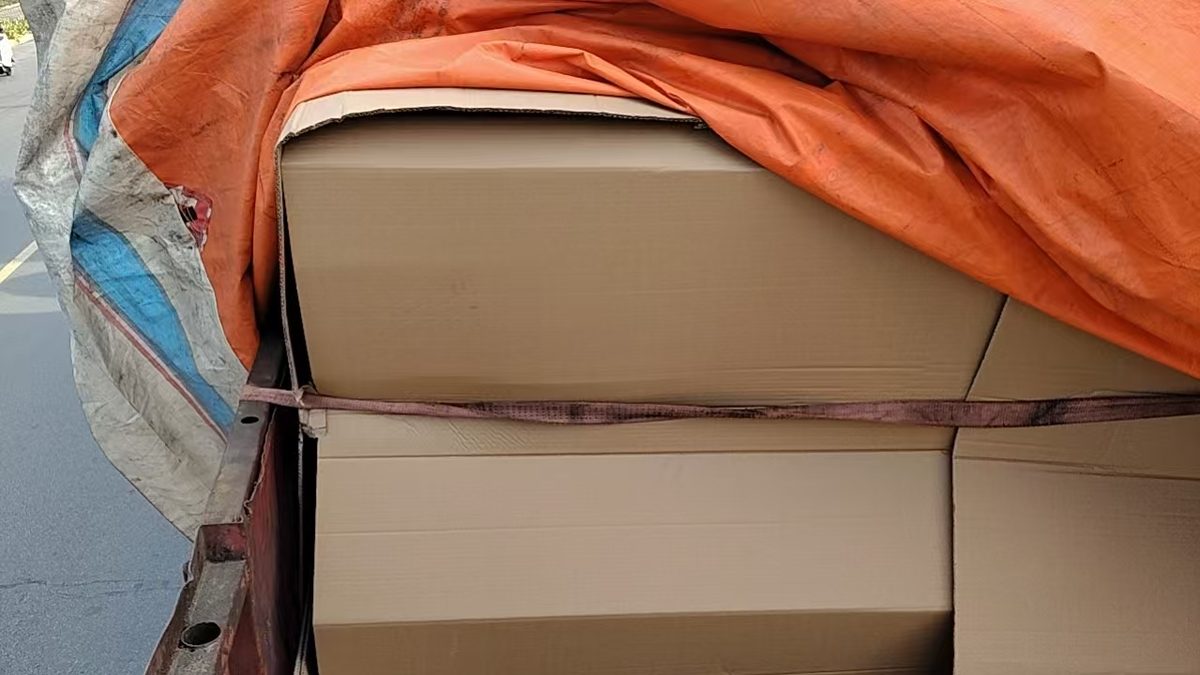
Protected the cargo in transit. The truck body was lined with cardboard on the floor and sides: food chemicals are sensitive to contamination. Bags on pallets were strapped and covered.
Cleared customs the same day. The brokers took over the moment the truck arrived. The cargo was released in three hours and reached the client's warehouse that day.
Result. More than ten items from different manufacturers arrived as one shipment, on schedule, without losing a single day. Two documentary mismatches were resolved before departure. Clearance took three hours instead of the usual day or more. The client's production never stopped.
CASE 02 · INDUSTRIAL CHEMICALS
Equipment for a chemical plant: factory audit before payment and end-to-end delivery
Cargo
Process equipment: vessels, apparatus and components for industrial chemical production
Origin
Manufacturing plant in China
Consignee
Industrial chemicals producer in Kyrgyzstan
Scheme
End to end: factory audit, purchase, pickup, freight, clearance in the client's name
Result
Delivered to the client's warehouse without a single remark
Equipment secured in the truck before departure
The task
The client needed equipment for a production line. These shipments differ from goods in a fundamental way: equipment is not taken off a shelf — it is built to order, paid for in advance, and it has to do more than arrive. It has to fit into a process and run.
The cost of a mistake is on another scale. A wrong batch of clothing gets sold at a discount. Wrong equipment, or the wrong configuration, stops a plant from starting — and the money is already with the supplier in China.
Where the difficulty was
The cargo arrived without a single incident — and that was not luck, it was the work done before departure. With equipment, almost every problem is created at two points: choosing the manufacturer and loading the truck. After that, nothing can be fixed.
So we front-loaded the work, and the transport itself turned out technically boring. In equipment logistics that is the best possible outcome.
What we did
Factory inspection and audit before payment. We checked legal status, licences and export rights, and confirmed this was a real manufacturer rather than a trading intermediary. For equipment this step is not a formality: an intermediary cannot answer for quality because it does not control it.
Verified completeness and documentation. Technical passports, manuals, specifications — without them the equipment cannot go on the books or through customs cleanly.
Arranged pickup at the plant and supervised loading.
Supervised securing. Vessels and apparatus have a high centre of gravity and smooth cylindrical surfaces: they want to roll and shift under braking. Bracing went against the sides, straps only around frames and supports — never around nozzles or fittings. A bent nozzle turns a vessel into a problem at installation.
Prepared customs in advance. Equipment is not one line item but a set, and how it is classified drives both the duty rate and the odds of questions at the border.
Cleared and delivered in the client's name, straight to the warehouse.
Result. The equipment arrived in the specified configuration, undamaged and with no remarks on documents, cleared in the client's name and delivered to their warehouse. One contract, one party responsible for the whole path.
CASE 03 · SUPPLY TO RUSSIA VIA KYRGYZSTAN
Meso devices and cartridges from China to Russia: sourcing, EAEU clearance and shipping documents
Cargo
Meso devices and cartridges for them
Route
China → Kyrgyzstan → Russia
Our role
Sourcing, logistics, customs clearance and documentation
Scheme
Official import into Kyrgyzstan, then supply within the EAEU
Result
Goods with the buyer in Russia, with a full document set from our company
The batch loaded and secured, ready to depart
Dispatching the batch from the warehouse
The task
A client in Russia needed meso devices and cartridges from China — not as a one-off, but as stock to trade with. With a full document set: so the goods could go through accounting, be sold to companies and stand up to an audit.
Why through Kyrgyzstan
Kyrgyzstan is a member of the Eurasian Economic Union together with Russia, Kazakhstan, Belarus and Armenia. Goods cleared in Kyrgyzstan under the proper procedure enter free circulation across the entire union. From there they move to Russia not as an import but as an ordinary domestic supply — no customs border, standard invoices and delivery notes.
This is not a workaround. Import happens once, in Kyrgyzstan, officially and with all payments made. What follows is trade inside a single market.
Where the difficulty is
Shipments like this break in the documents, not on the road. There are three links in a row: the Chinese invoice, the customs declaration in Kyrgyzstan and the shipping documents into Russia. They must agree with each other on names, quantities, units and values.
A mismatch in any link surfaces at the final buyer: on receipt, on booking or during an audit. And by then the goods are sold and nothing can be changed.
So we built the chain backwards: first we defined what the buyer in Russia had to receive, and only then assembled everything else to match — down to how each item is named in the Chinese invoice.
What we did
Took over the purchasing. Found and verified the supplier, agreed specifications and paid in RMB from our own entity. The client needed no Chinese account and no currency controls.
Inspected the goods before shipping. Count, conformity, packaging condition, cartridge completeness.
Delivered to Kyrgyzstan and cleared customs. Official import with duties paid, classification by code and a complete document set.
Issued shipping documents from our company — the set the Russian buyer accepts and books the goods against.
Shipped to Russia within the EAEU, without a customs border.
What this gives the client
One supplier instead of four. Instead of a buying agent, a carrier, a broker and a lawyer — one contract and one party responsible end to end.
No settlements with China. Currency transfers and prepayment risk stay on our side.
Documents that get accepted. Legally imported and legally supplied, with the full chain from the Chinese invoice to the delivery note.
Repeatability. Once the scheme is built it runs on repeat for the next batches.
Result. The client received Chinese goods in Russia with a full document set, without handling sourcing, logistics or customs. The scheme is proven and repeatable for future shipments.
CASE 04 · PRODUCTION EQUIPMENT
Toilet paper production line: the machine was run before payment, 13 days to Bishkek
Cargo
Complete toilet paper production line
Origin
Foshan, Guangdong province
Consignee
Manufacturing site in Bishkek
Scope
Full cycle: factory sourcing, inspection, purchase, delivery, customs clearance, unloading
Transit time
13 days from Foshan to the client’s warehouse
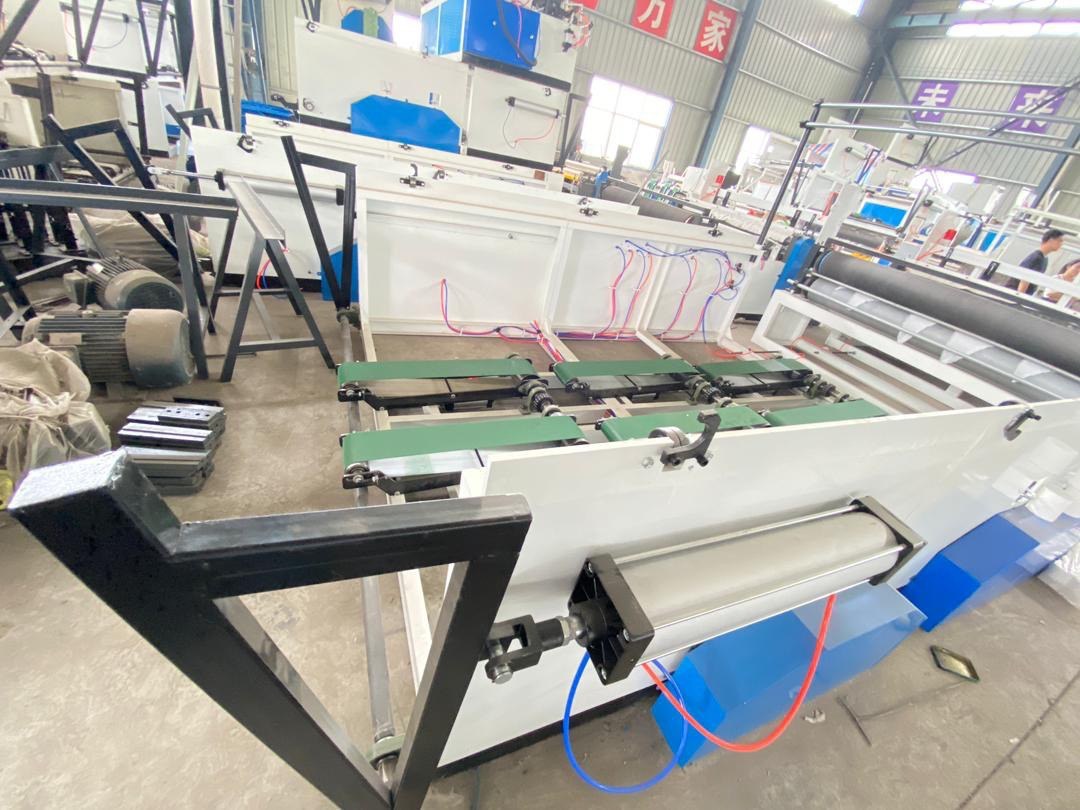
Line inspection at the factory in Foshan
Unloading at the client’s warehouse in Bishkek
The line has arrived: unloading in Bishkek
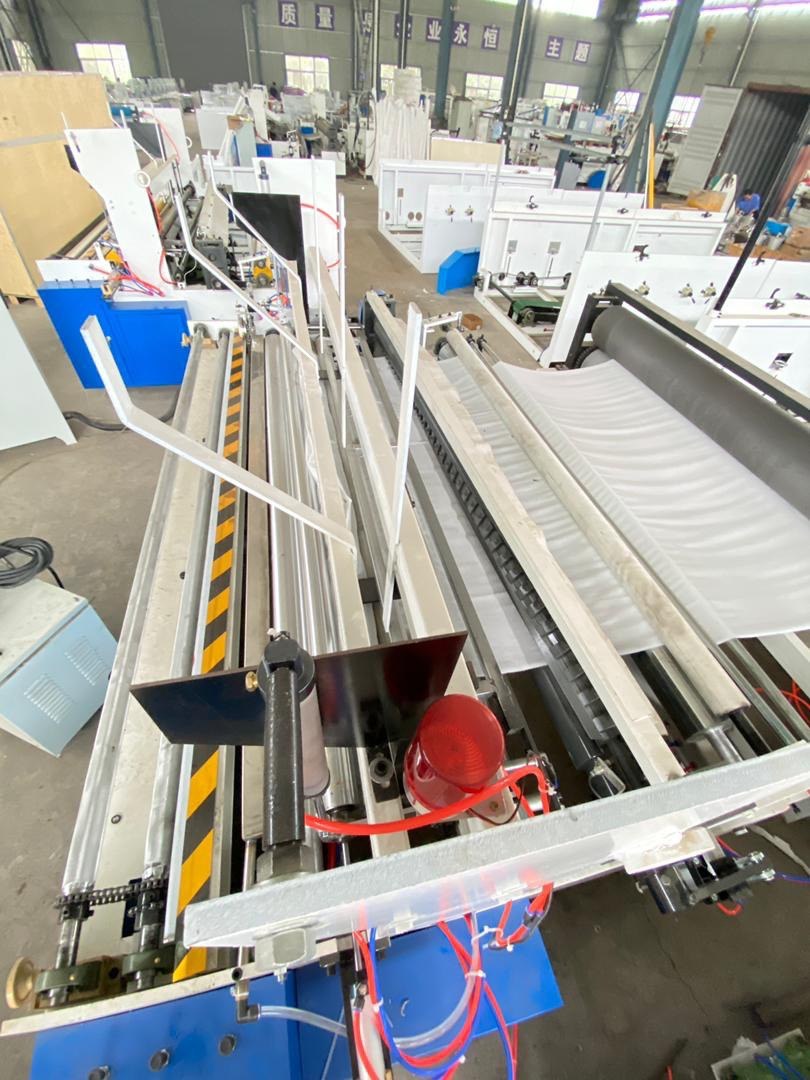
The line at the manufacturer. Inspection before purchaseRewinding unit. Web threaded, machine running
The task
The client was buying his first production line. The situation is common and unpleasant: the factory in China is found, the price is quoted, but a buyer sitting in Bishkek physically cannot verify what stands behind a well-made offer. Flying to Guangdong for a single inspection is expensive, and trusting photos from a chat means risking the entire amount. Equipment is not clothing: if the line turns out to be wrong or non-working after customs clearance, shipping it back to China costs more than the machine itself.
What we did
Our specialist travelled to the factory in Foshan and inspected the line before the client transferred any money. We did not look at a machine standing under plastic wrap — we looked at a working one: the line was started, the paper web was threaded and run in front of our inspector. The photo above is that exact moment: the web is moving over the rollers and the indicator lamp is on.
The difference matters. Anyone can look at equipment standing on a factory floor. Seeing it actually run before the money leaves your account is a different level of certainty. This is the stage where most of the problems surface — the ones that cannot be fixed later.
After payment the line was inspected a second time, right before loading, so that exactly what had been examined went into the container. Then came the purchase, the haul from Foshan, customs clearance and unloading at the client’s site.
The result
13 days from Foshan to the warehouse in Bishkek. The client never left Kyrgyzstan, never dealt with the factory directly and never touched customs. He received the line, the documents, and the confidence that the equipment starts — because he had watched it on video before parting with his money.
CASE 05 · VEHICLES
Cars from China to Russia via Kyrgyzstan: purchase, customs clearance and delivery to eight cities
Cargo
Passenger cars from China
Origin
China
Consignees
Moscow, Saint Petersburg, Yekaterinburg, Novosibirsk, Chelyabinsk, Kazan, Tyumen, Pyatigorsk
Scope
Sourcing and inspection in China, delivery, customs clearance in Kyrgyzstan in the name of the client’s representative, onward shipment to Russia
Transit time
18–20 days
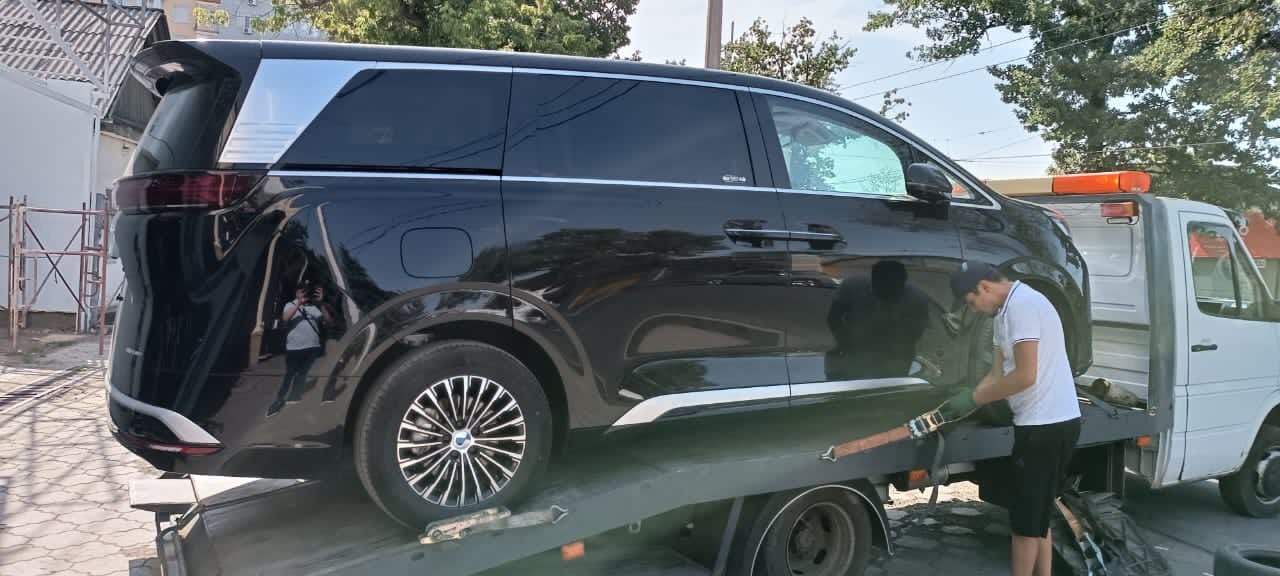
Securing the vehicle before shipment to the consignee
The task
Buying a car in China looks simple right up to the moment paperwork begins. Then come the parts nobody mentions in the listing: the seller has to be verified, the money has to be transferred so that it actually arrives, the vehicle has to be hauled, cleared through customs and legally imported into Russia. At every one of those steps a private buyer is alone with a foreign country, a foreign language and a foreign legal system.
How the route works
We handle the car from sourcing to the consignee’s door. We find and inspect the vehicle at the seller, buy it, export it from China and deliver it to Kyrgyzstan. Here the car goes through customs clearance, filed in the name of the client’s representative. From that point the vehicle is inside the customs territory of the EAEU.
That is precisely why the route runs through Kyrgyzstan rather than directly. A car cleared in Kyrgyzstan then moves within the EAEU without a second customs procedure. For the consignee in Russia this means the hardest part of the journey is already done and backed by documents.
Coverage
We regularly ship vehicles to Moscow, Saint Petersburg, Yekaterinburg, Novosibirsk, Chelyabinsk, Kazan, Tyumen and Pyatigorsk. A typical run from China to the consignee takes 18–20 days including customs clearance.
The client does not need to fly to China, register a company or learn customs codes. He receives the car and a complete set of documents for it.
CASE 06 · LIGHTING
Neon and string lights from Guangzhou to Novosibirsk: fourth year of regular shipments with TR CU certification
Cargo
Neon strip, string lights, decorative lighting
Origin
Guangzhou
Consignee
Novosibirsk
Batch size
From 500 to 4,500 kg
Scope
Customs clearance in the name of the client’s local company in Kyrgyzstan, then within the EAEU without a second procedure
Transit time
18 days via Bishkek
Relationship
4 years, recurring shipments
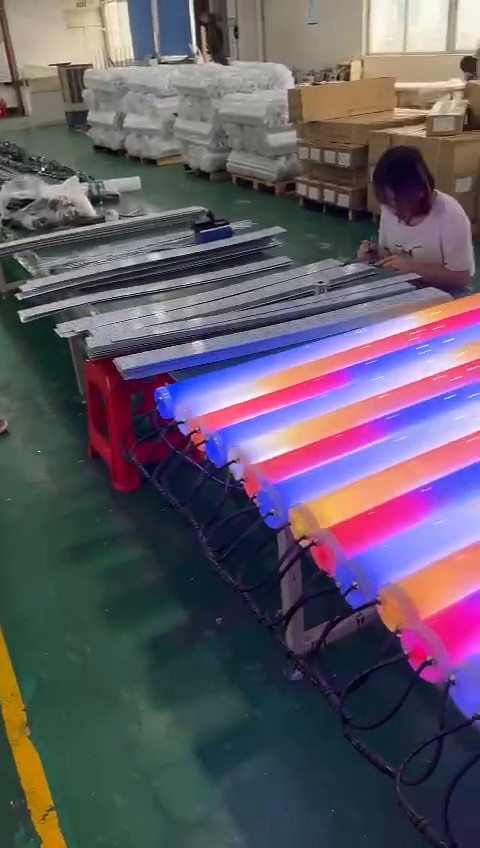
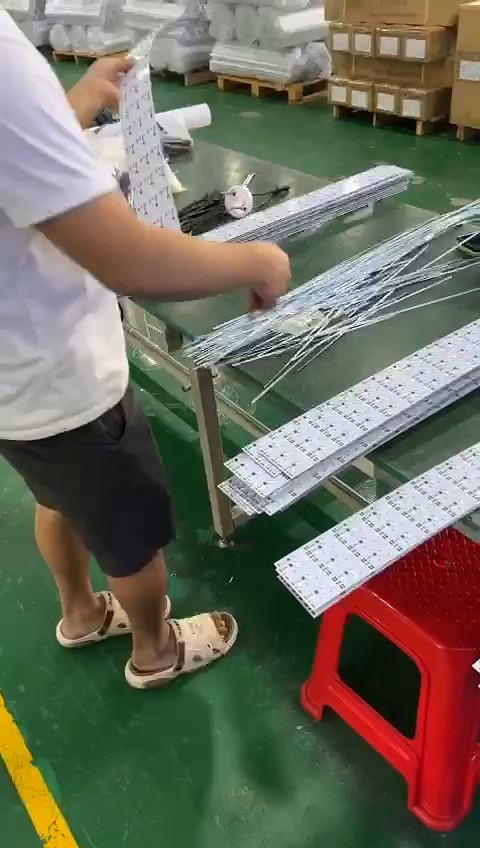
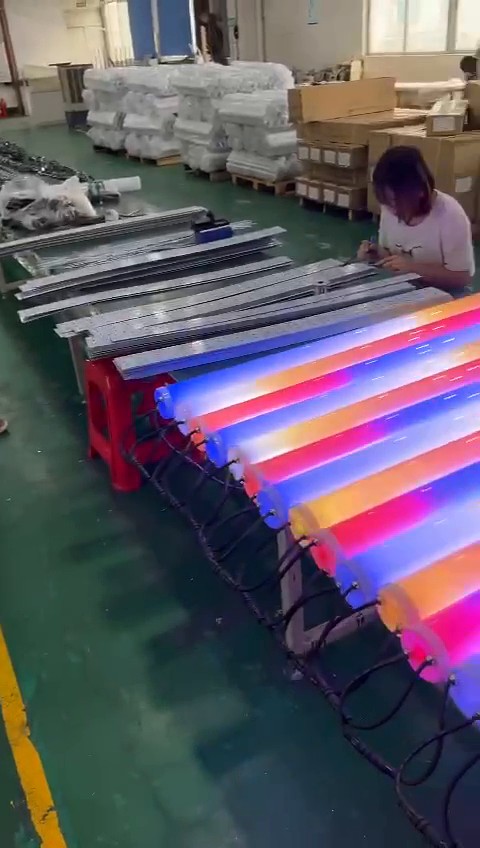
Batch test on the factory floor: every tube is checkedThe glow is verified before packing, not afterBoards and wiring at assemblyThe whole batch lit: every tube works
The task
Lighting is the cargo people stumble on most often. Not because it is hard to move: the boxes are light, the dimensions are ordinary, a truck takes the batch without trouble. The difficulty starts at the EAEU border, and it is a paperwork problem.
String lights and neon strip are low-voltage electrical equipment. Importing them into the EAEU requires declarations of conformity under technical regulations TR CU 004/2011 and TR CU 020/2011. Without them the batch is not released and the cargo sits in a bonded warehouse, where every day costs money.
This is where most carriers step aside: we will haul it, the certificates are your problem. A client who simply wanted stock in time for the season suddenly finds himself alone with a certification body, test reports and deadlines he does not control.
What we do
We close that question ourselves. We buy the goods in Guangzhou, obtain the required conformity documents, haul the cargo via Bishkek and clear it in the name of the client’s local company in Kyrgyzstan. After clearance the shipment travels on to Novosibirsk inside the EAEU, with no second customs procedure.
Batches vary from 500 kilograms to 4.5 tonnes depending on the season and the order book. Guangzhou to Novosibirsk takes 18 days.
The result
This is not a one-off shipment but a working supply channel now in its fourth year. The client comes back for every batch, even though the market is full of offers and our price is not the lowest.
We consider this case stronger than any single delivery. Anyone can get one shipment through on time — sometimes it is simply luck. Four years running is not luck.
CASE 07 · PLAYGROUND EQUIPMENT
Playground in a container: a 2,400 kg weight discrepancy surfaced at the border and was closed overnight
Cargo
Children’s playground, 40-foot High Cube container
Origin
Guangzhou
Consignee
Kyrgyzstan, installation at the client’s site
Scope
Purchase, container preparation, delivery, customs clearance in the client’s name
Transit time
12 days against an agreed 12–14
Transloading the container after customs clearance
The task
A playground is an object with an opening date. It is installed to a deadline: the start of the season, the handover of a courtyard, a city celebration. That date cannot be moved because it has already been announced. The client gave us a 12–14 day window from China and asked us not to exceed it.
Loading
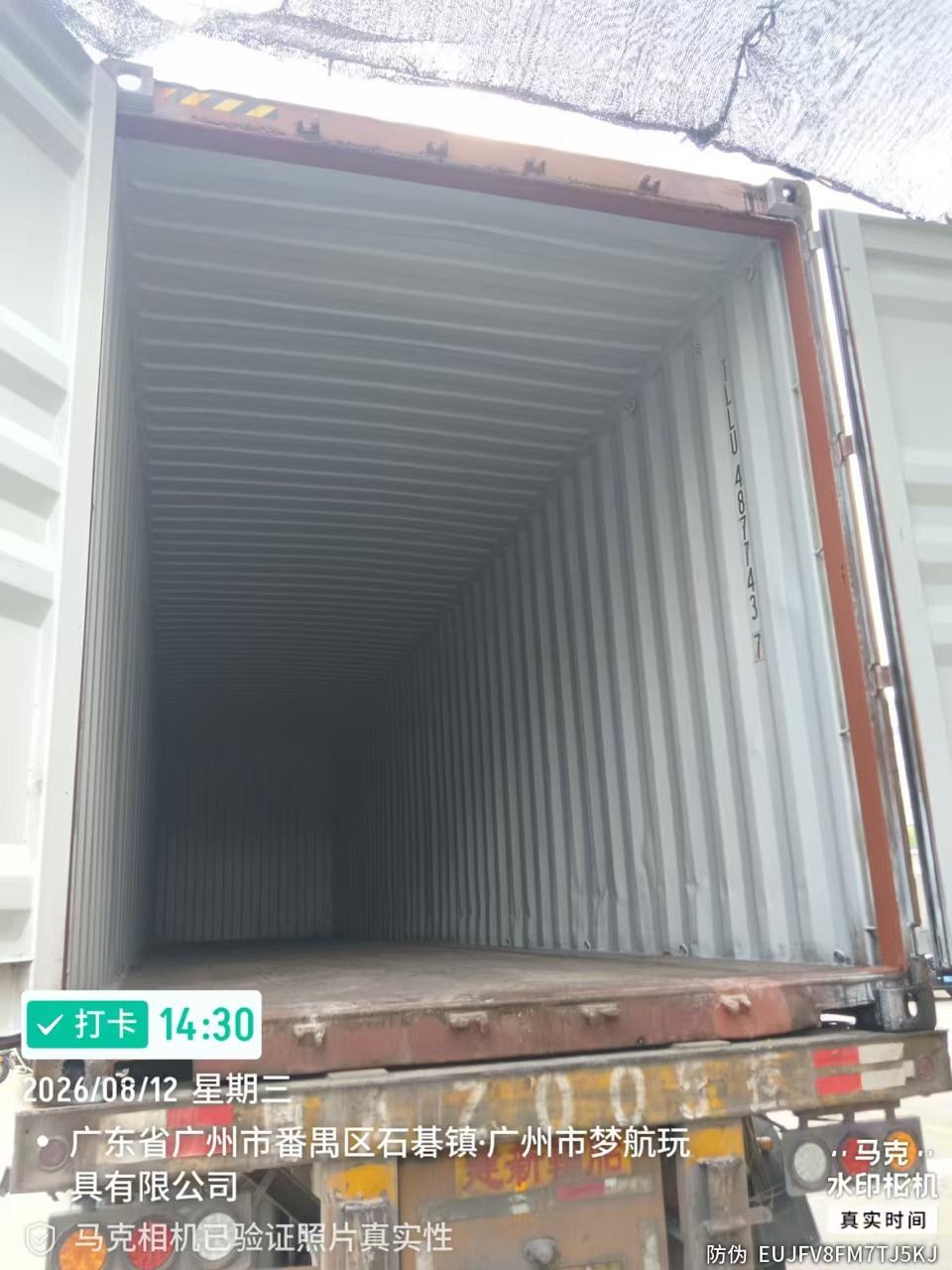
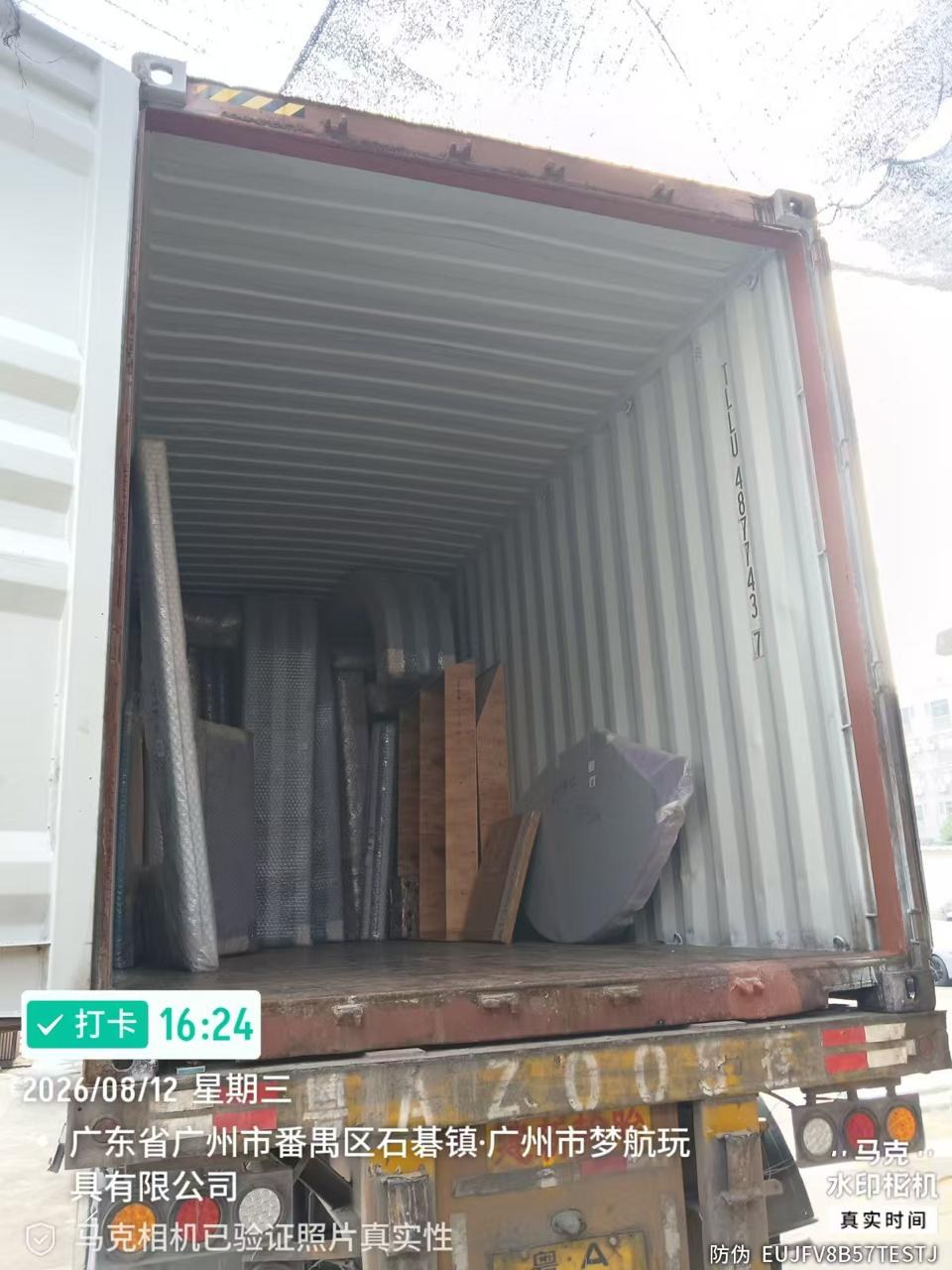
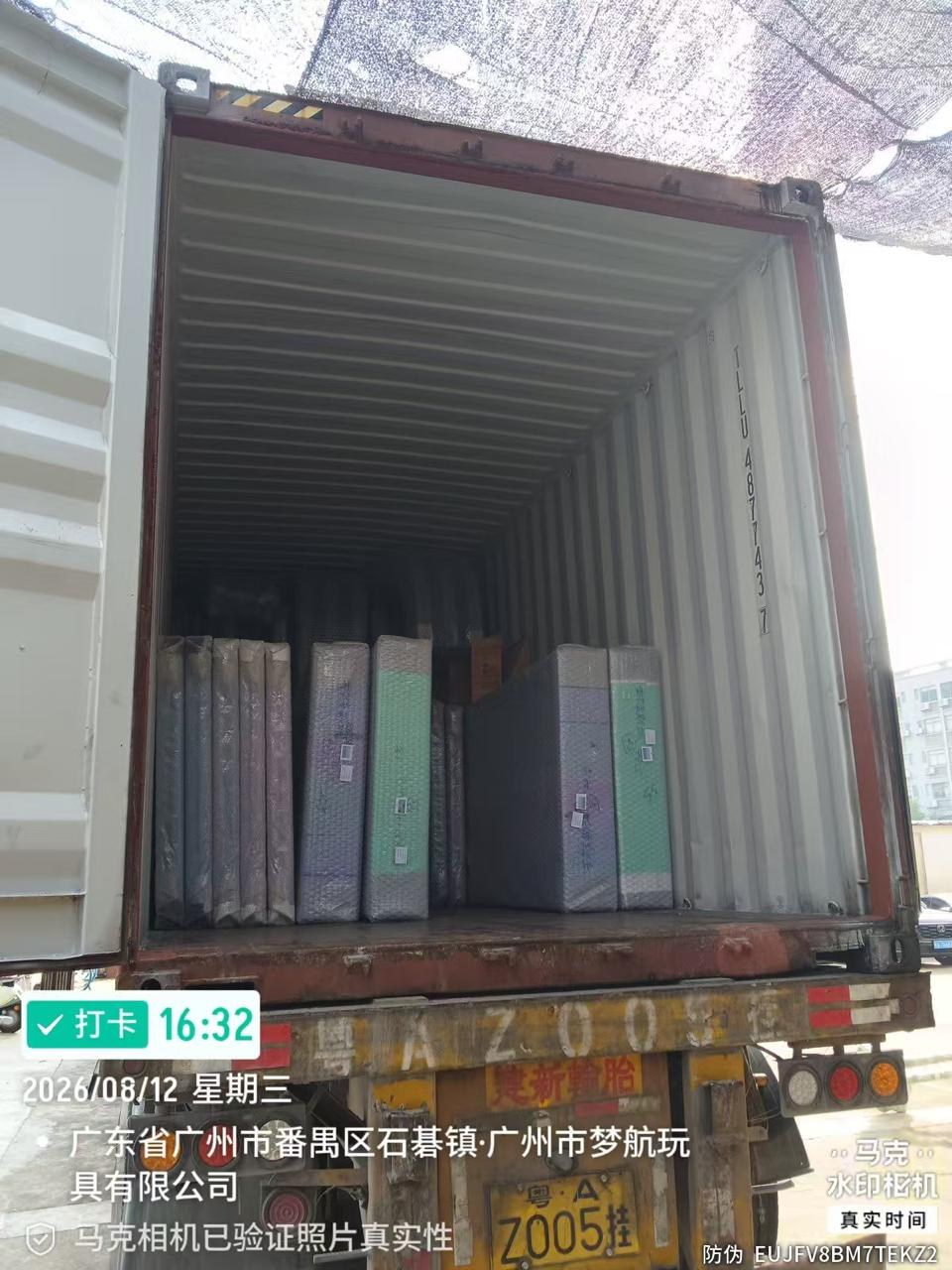
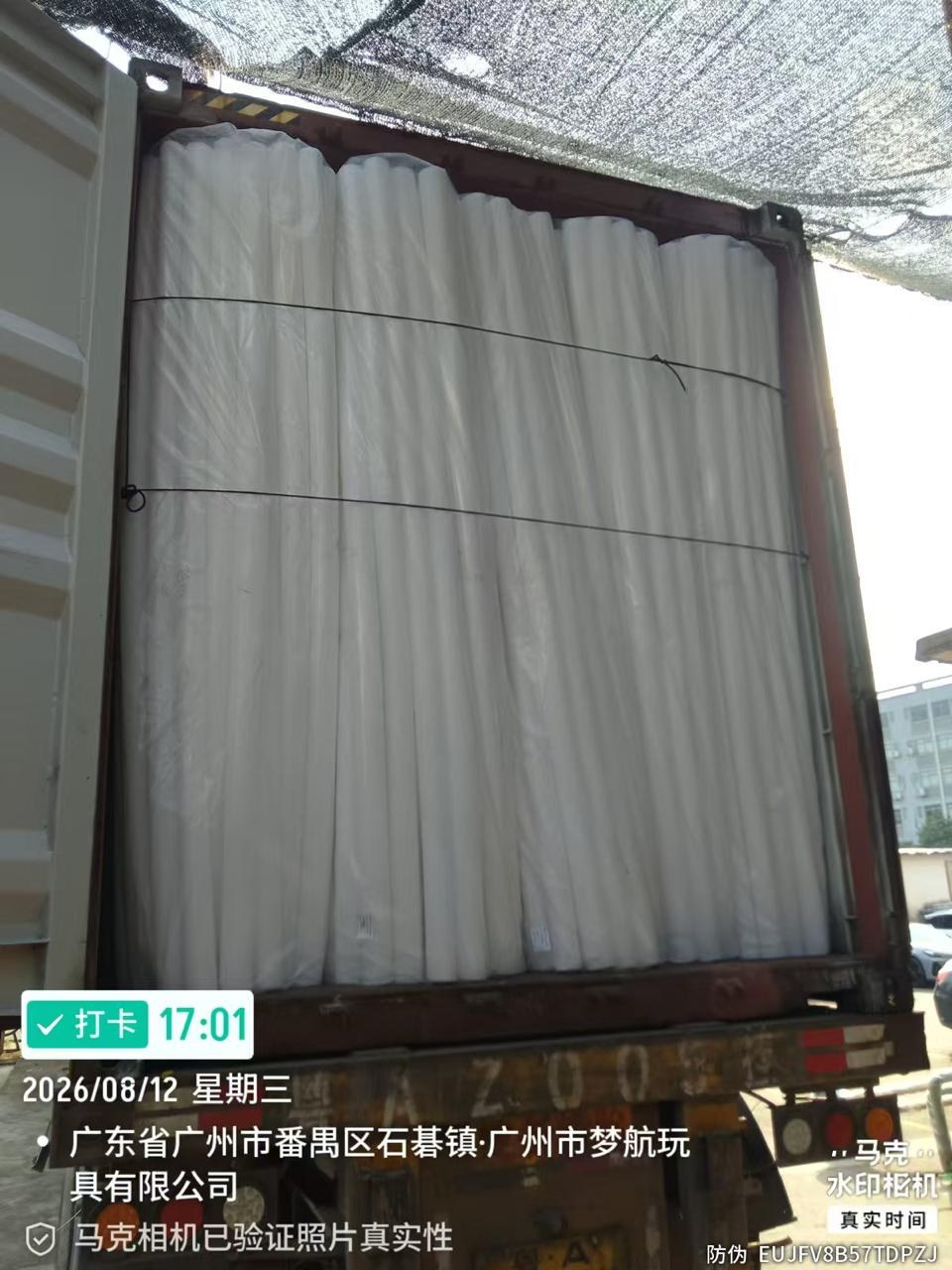
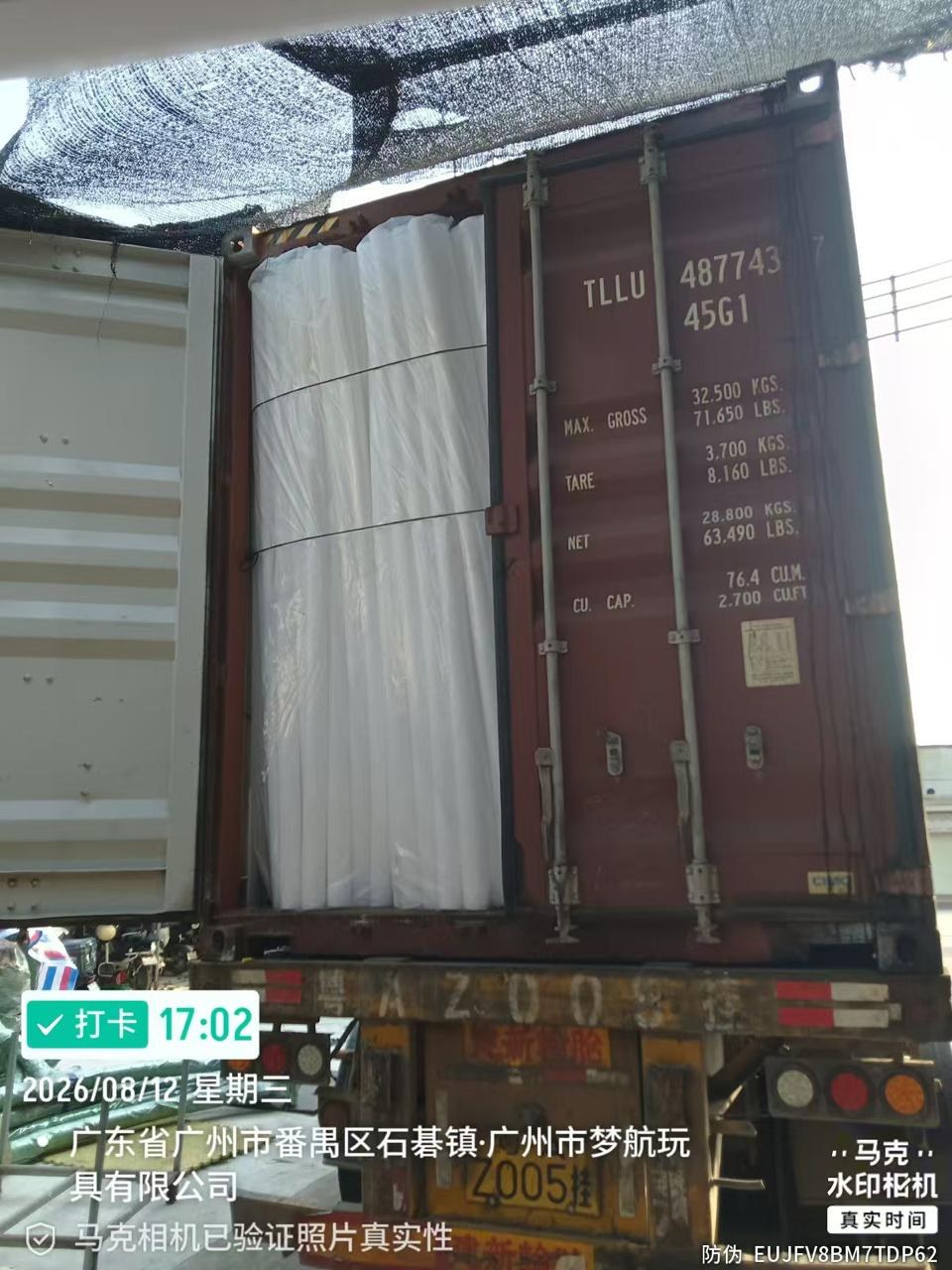
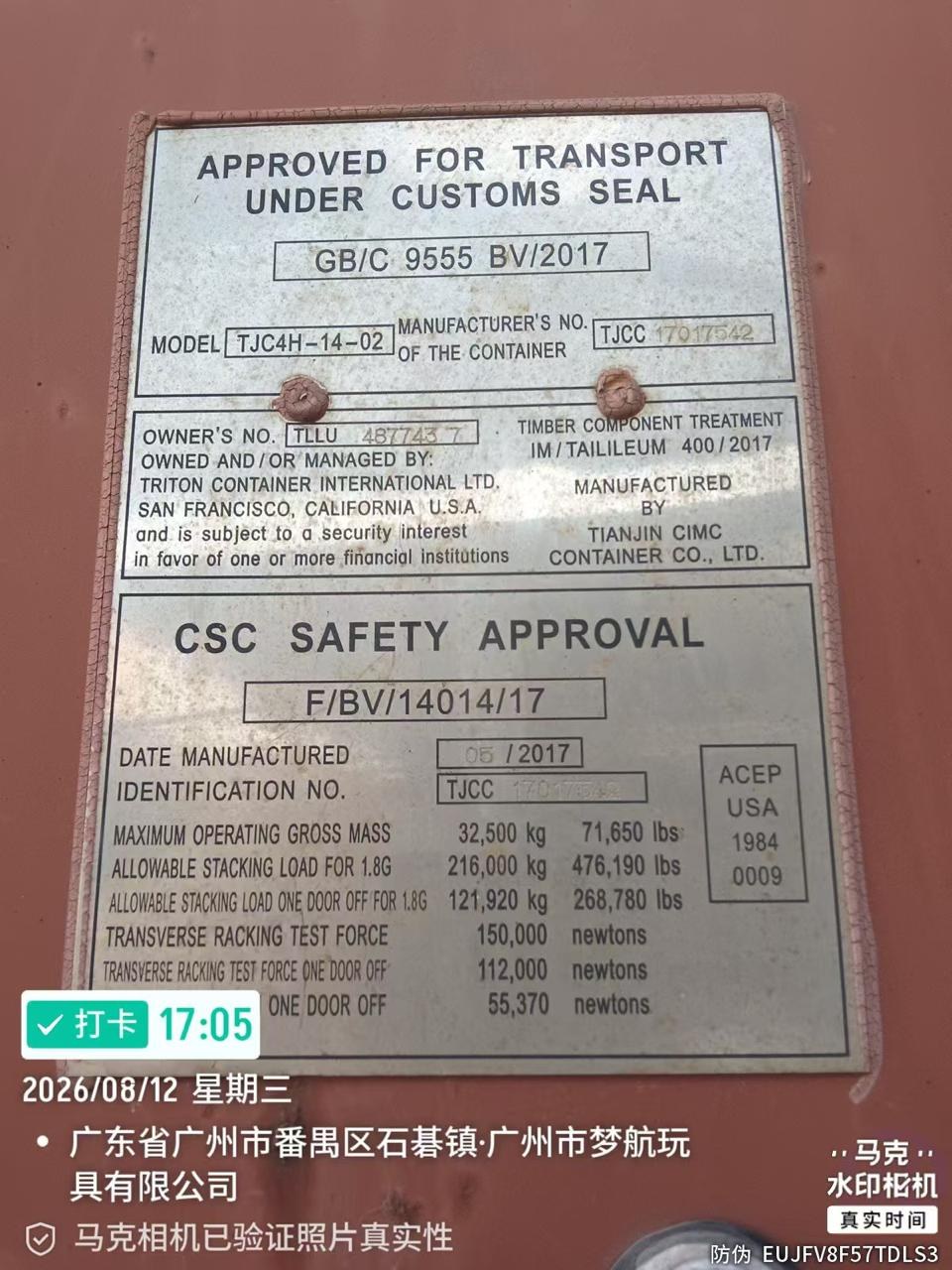
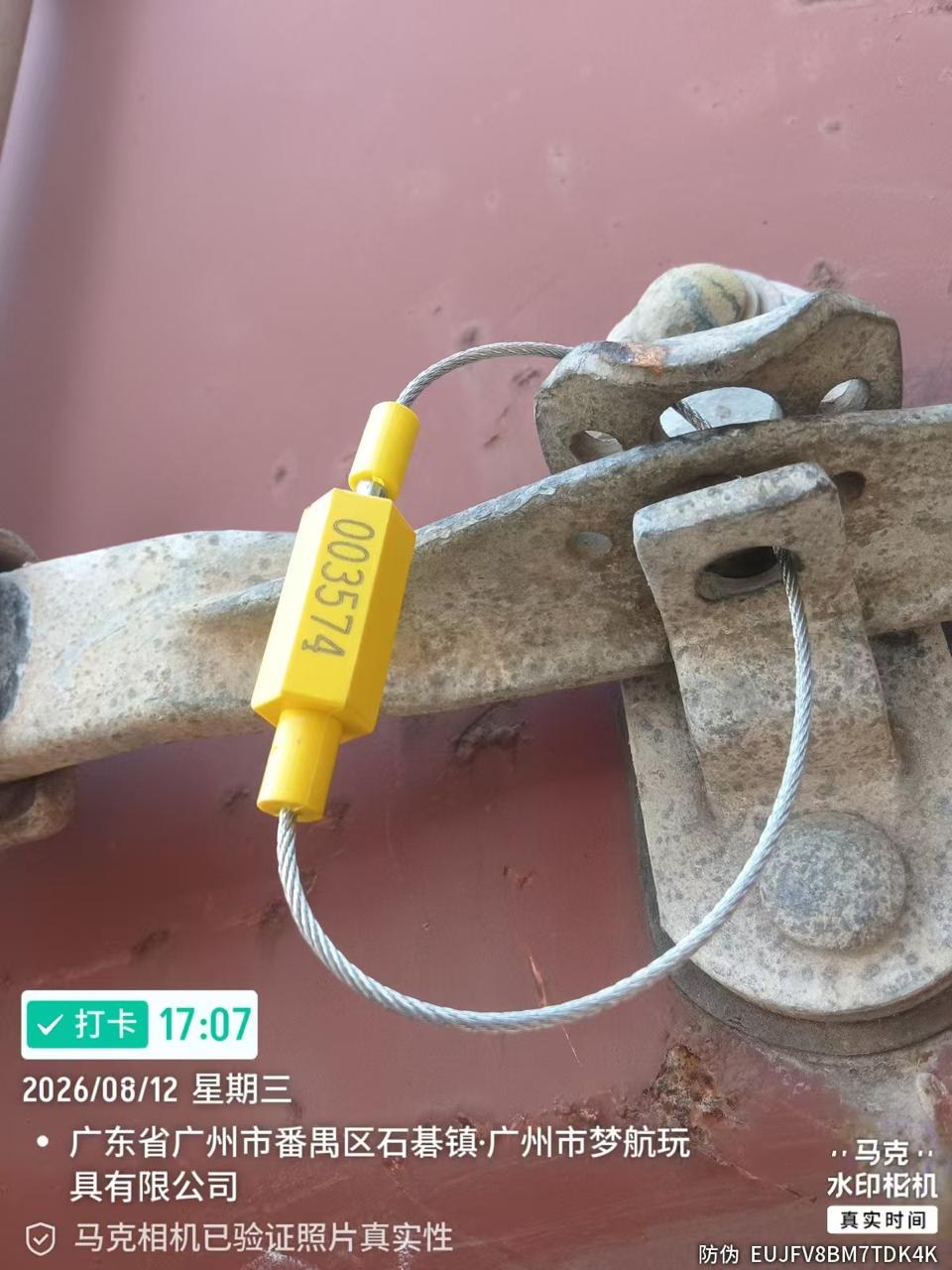
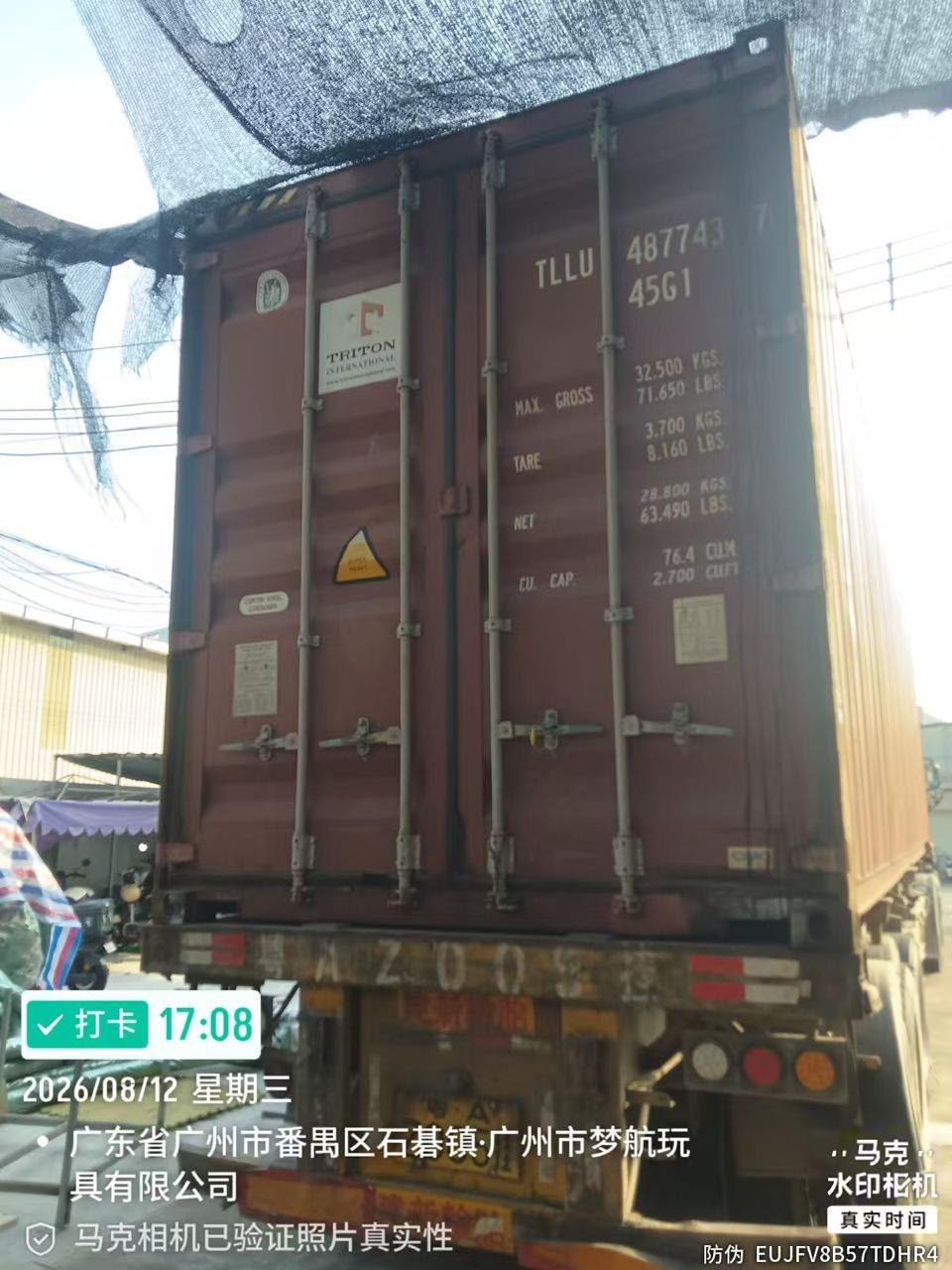
The container was loaded in Guangzhou on 12 August. First we inspected the empty container from the inside — dry, sound floor, no residual odours. Then the playground was loaded, the doors were closed and the container was sealed in the presence of our representative. The whole cycle took under three hours, and every step is photographed with a timestamp.
14:30. Empty container inspected16:24. First components loaded16:32. Panels along the walls17:01. Container fully loaded17:02. Doors closing17:05. CSC plate17:07. Seal 00357417:08. Sealed and readyIn transit
What went wrong
The export documents had been filed and the container was on its way to the border. On the weighbridge it turned out that the actual weight of the playground did not match the figure supplied by the manufacturer. The discrepancy was 2,400 kilograms — the cargo was substantially heavier than declared.
This is not a typo you correct by hand. When the weight on the export declaration differs from the weight on the scales, the container simply is not released: to customs these are two different cargoes. On top of that, unplanned tonnes mean axle loads nobody had accounted for.
We will say it plainly, because an honest case is more useful than a flattering one: the error was the manufacturer’s, and it surfaced at the border rather than at our warehouse. The only question left was who would sort it out and how long it would take.
How it was solved
Our specialists re-issued the entire document set that same night, working until three in the morning. In parallel they contacted Chinese customs and had the discrepancy agreed. By morning the container was moving again.
The result
12 days from Guangzhou to Bishkek against an agreed window of 12–14. The container was cleared in the client’s name, after which he collected the equipment and took it to the installation site. The opening date did not move by a single day.
The client learned about all of this afterwards. From where he stood, the delivery looked like a straight line from Guangzhou to his site. We think that is how it should be: a client should not have to feel someone else’s problems.
CASE 08 · WEIGHING EQUIPMENT
60-tonne truck scales from Qingdao to Bishkek: 26 tonnes on a dedicated truck in 10 days
Cargo
60-tonne truck scales and components
Origin
Qingdao, Shandong province
Consignee
Bishkek
Scope
Dedicated truck, total weight 26 tonnes
Transit time
10 days — a hard condition set by the client
Loading the weighbridge sections in China
Transloading en route
Delivery to Bishkek
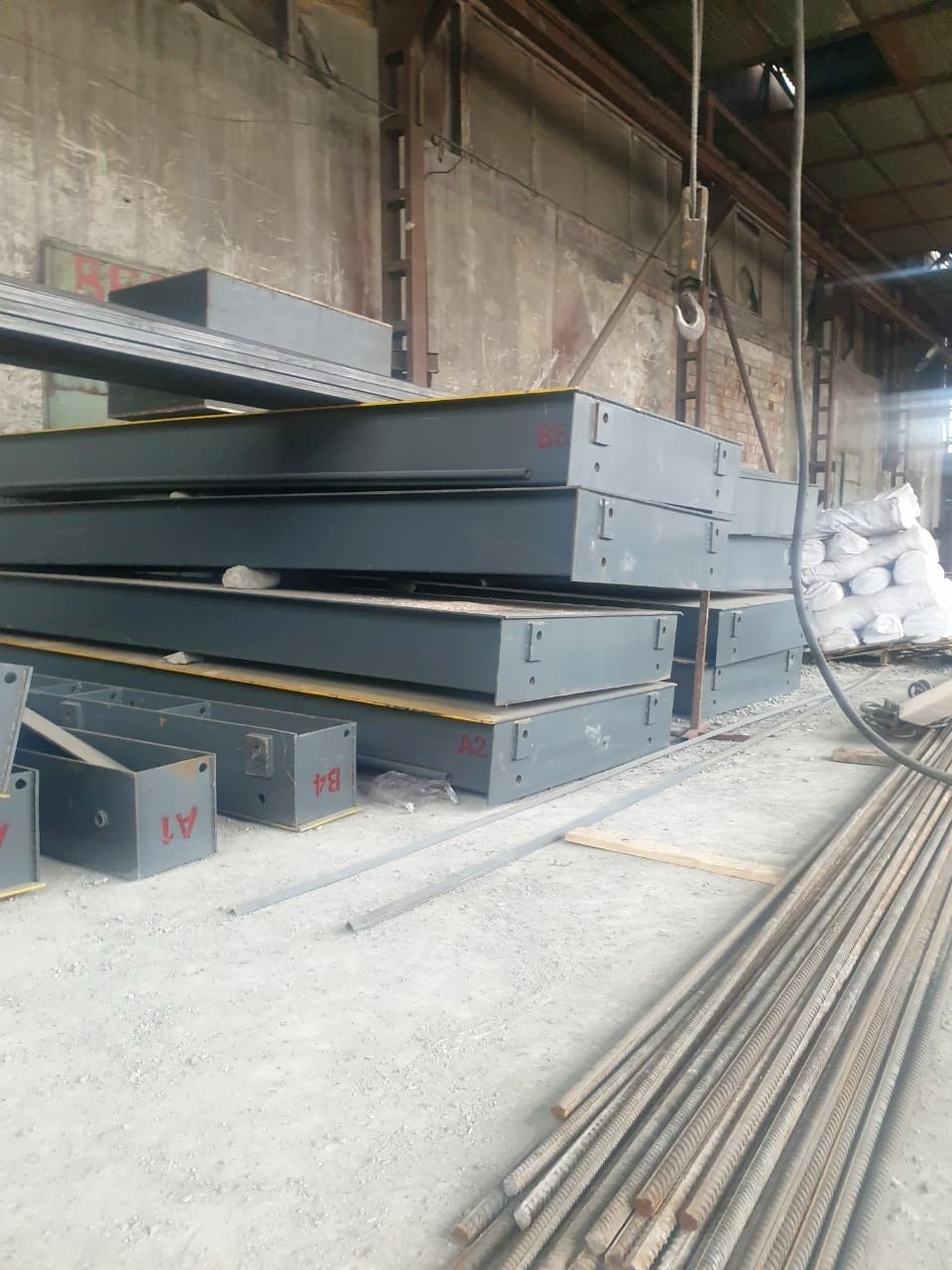
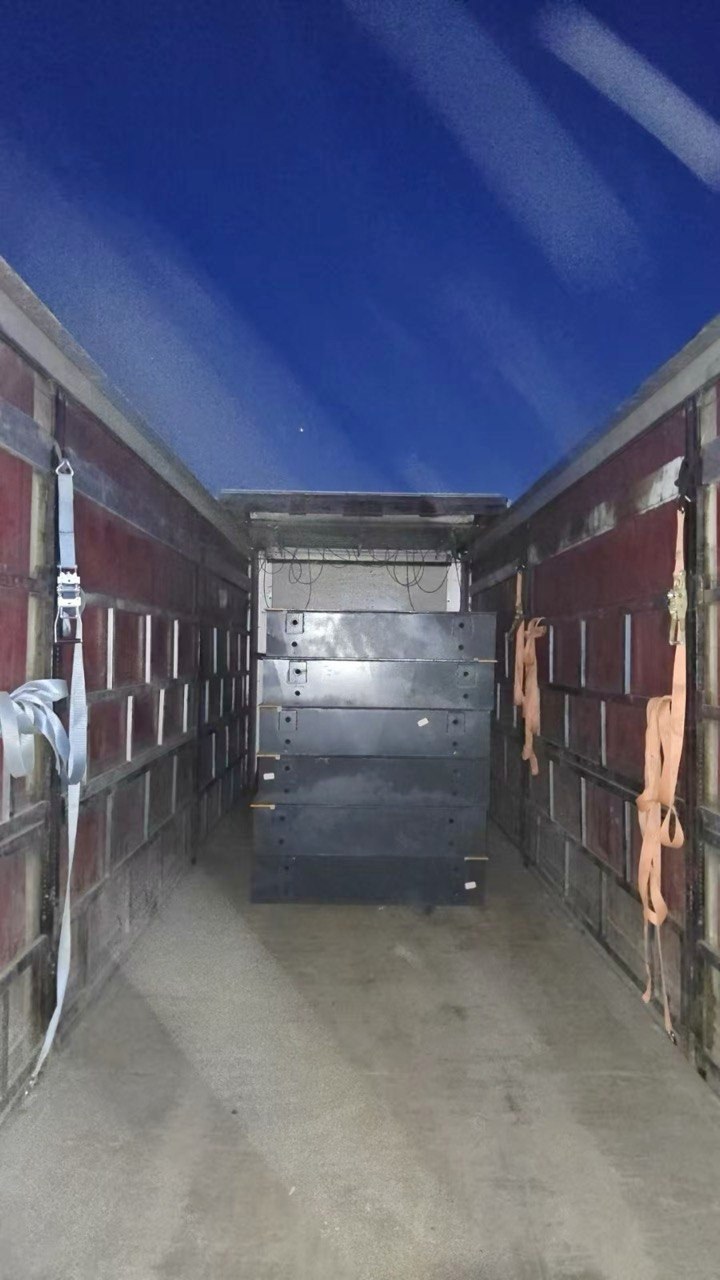
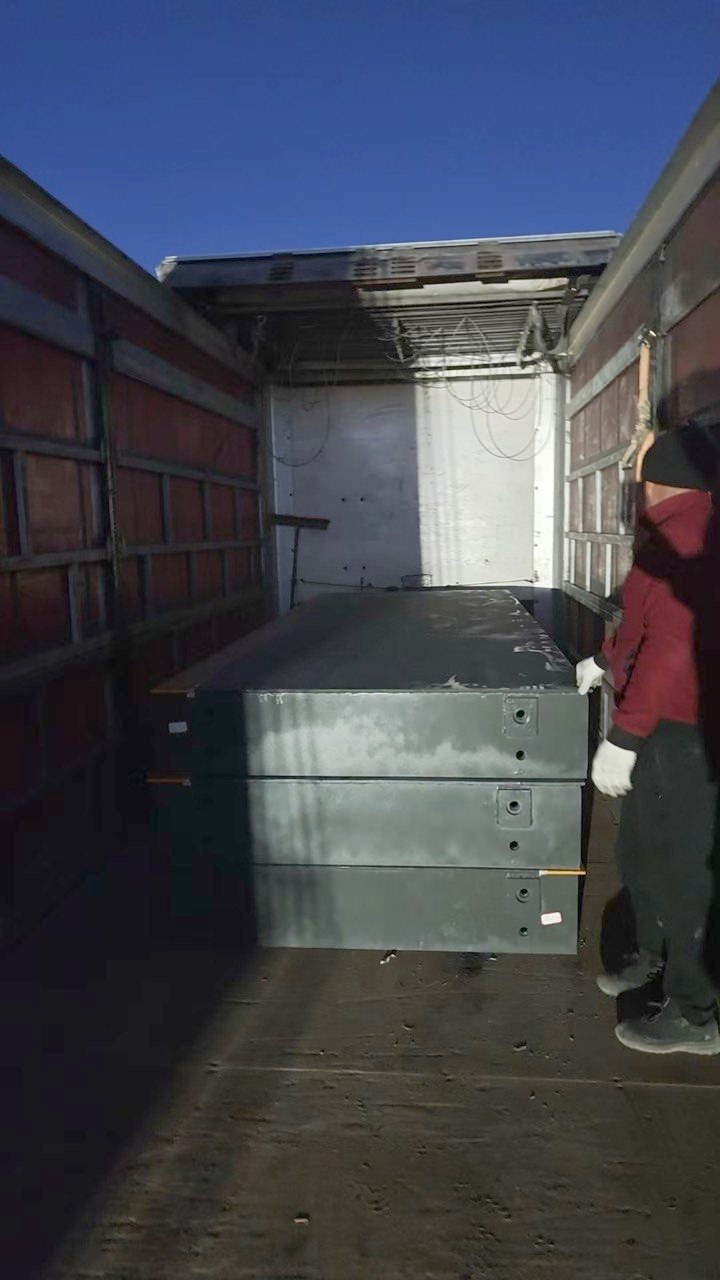
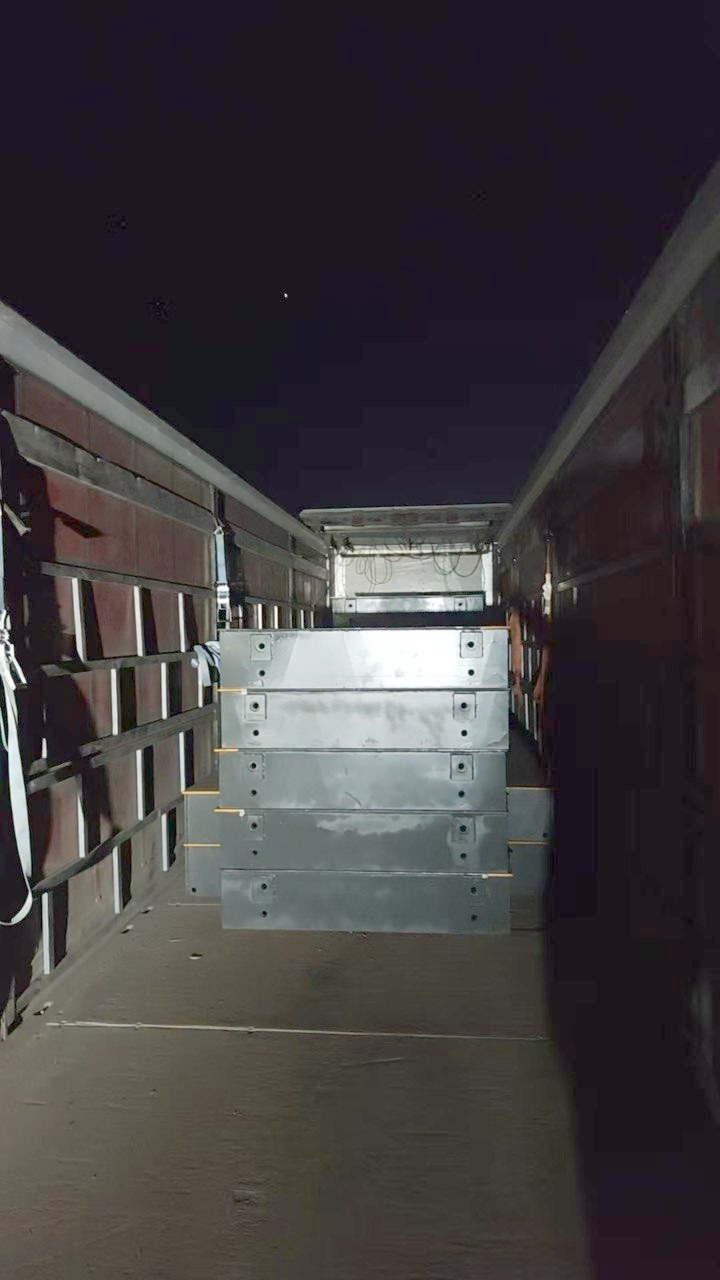
Platform sections with installation markingLoading the sectionsStacked and securedTransloaded at night to save a day
The task
The client set a condition that usually earns a polite refusal from freight forwarders: deliver truck scales from China in 10 days. Not roughly ten — ten. Weighbridges are installed for a specific facility, and until that facility starts up, the site does not work without them.
Qingdao sits on China’s east coast. It is around five thousand kilometres to Bishkek, including a border crossing and a transload en route. Ten days over that distance means roughly 500 kilometres a day with no stops beyond the necessary. The usual pace on this route is noticeably slower.
Why a dedicated truck
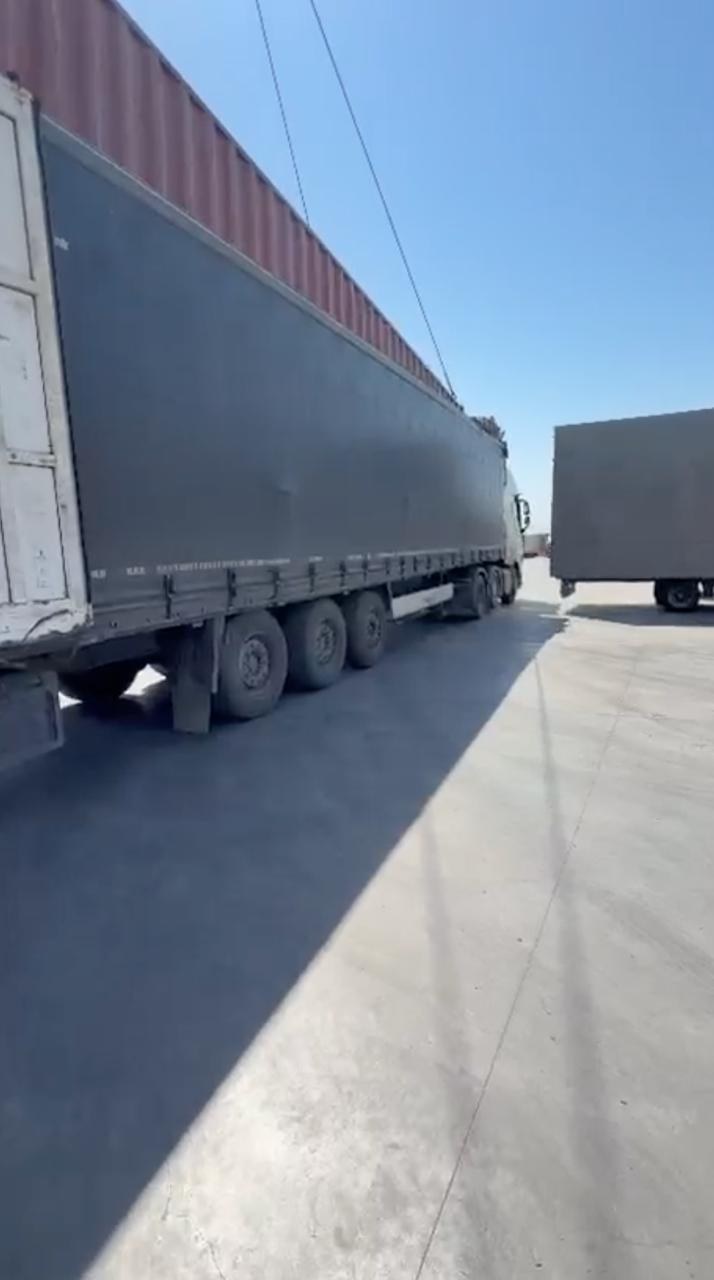
The total weight came to 26 tonnes. Our trailer takes 28 — the truck ran at 93 per cent of its payload. By volume it was almost empty: a weighbridge platform is solid steel, and it hits the weight limit long before the trailer runs out of space. Putting cargo like this into a groupage load makes no sense, because it consumes the entire payload anyway.
26 tonnes in one compact stack cannot simply be placed in the middle of the trailer. The gross weight would be within limits while the axle loads went over — and the truck would be turned back at the first weighbridge checkpoint. The stack goes in a calculated position and the axle distribution is worked out in advance. It turned out to be a job about delivering scales in which we were the ones being weighed.
How it was hauled
A dedicated truck, no additional freight and no waiting for consolidation. The transload en route was done at night, as soon as the truck arrived, so as not to lose a day waiting for a convenient hour. You can see it in the photographs above: they are dark because the work happened when the transport turned up.
Timber packers were laid between the sections and the load was strapped to the sides. A weighbridge platform is painted steel: when sections rub against each other the paint comes off, and the client receives new equipment already spotted with rust before installation.
The detail only installers notice
The sections carry installation marking — A1, A2, B4, B5. Truck scales are assembled on the foundation in a strict order and the sections are not interchangeable. If the marking rubs off in transit or was never applied at the factory, the installer on site starts matching parts by guesswork, and the scales later fail verification. We make sure the marking arrives legible.
The result
10 days from Qingdao to Bishkek. The client’s condition was met, the equipment arrived undamaged and with legible installation marking — ready to install rather than ready to argue about.
CASE 09 · COMMERCIAL VEHICLES
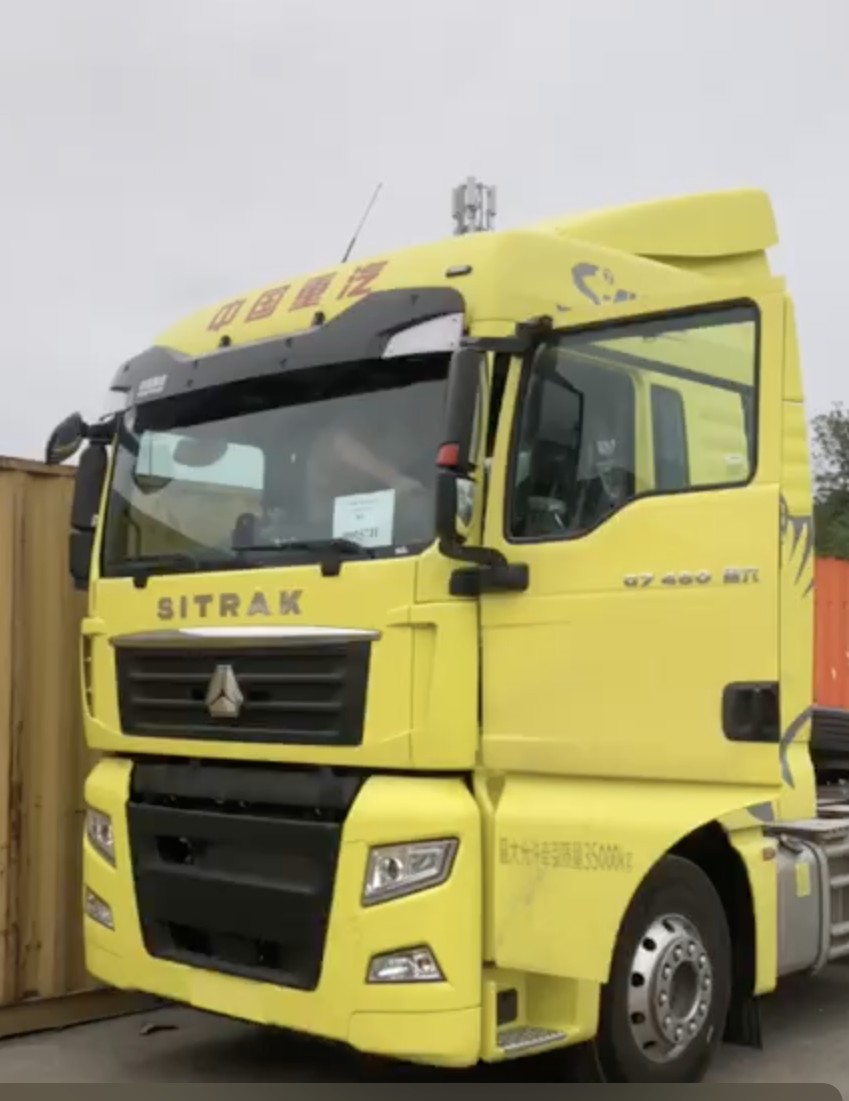
SITRAK G7 480 tractor unit from Urumqi to Tyumen: driven from the border and cleared in Bishkek
Cargo
SITRAK G7 480 tractor unit, Sinotruk
Origin
Urumqi
Consignee
Tyumen
Scope
End to end: purchase, drive from the border, customs clearance in Bishkek, delivery to Russia
Transit time
18 days
SITRAK G7 480 tractor unit before shipment
SITRAK G7 480 — Sinotruk’s flagship tractor unit, 480 hp
The task
A client in Tyumen needed a SITRAK G7 480 tractor unit — Sinotruk’s flagship machine at 480 horsepower. The brief was the whole job: find it, buy it, export it, clear it and hand it over in Tyumen. No splitting it into we will get it to the border and you take it from there.
Where the difficulty was
A truck is not a box; you cannot simply put it in a trailer. It had to be driven from the border under its own power. At that point the vehicle had not yet been cleared, so you cannot just get in and drive: you need a driver willing to move uncleared equipment under the established procedure.
This is exactly where most carriers decline. Plenty of companies can move containers. Arranging the transfer of a single vehicle that has not yet passed customs is a different order of problem, and few take it on.
How it was solved
We found a driver and brought the tractor unit to Bishkek under its own power. Here the vehicle went through all customs procedures. Once cleared, it continued to the client in Tyumen.
The result
18 days from Urumqi to Tyumen. The client received the tractor unit with a full set of documents and at no point had to deal with either the transfer or the customs work.
We move tippers, special-purpose machinery and commercial vehicles the same way. If a machine cannot be loaded, it drives — and that is our job too.
More cases are added as clients approve publication. If you want an example in your cargo category, write to us and we will go through the details.
Send us the weight, volume and pickup city on WhatsApp +996 700 11 1688 — we reply with a quote within an hour.